Gabriela and the VELLA Method: when a real story becomes a methodology
The journey that gave rise to the VELLA Method and its foundations
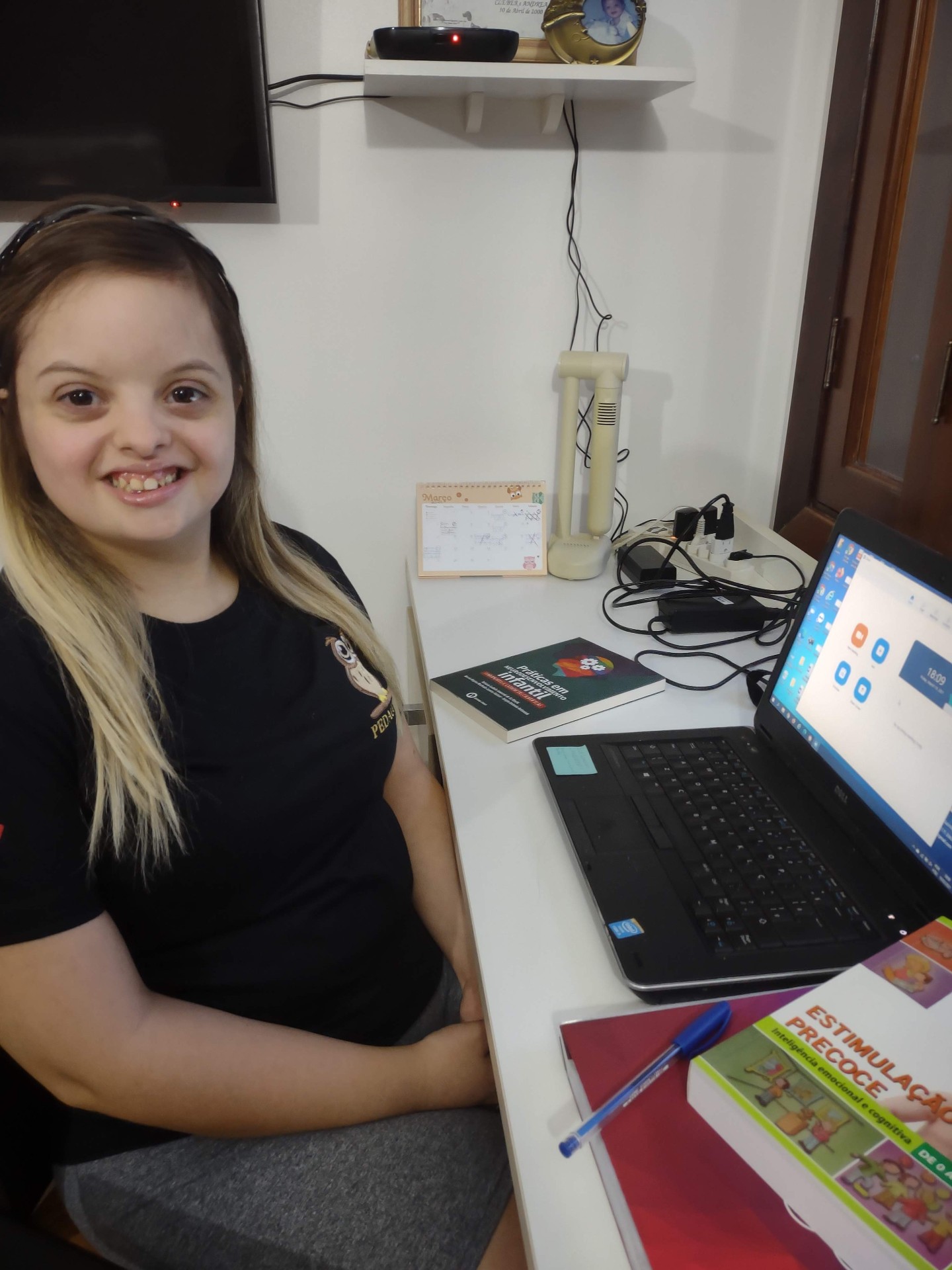
Not every methodology is born in books. Some are born in the silence of doubts, in repeated attempts and, above all, in a love that refuses to give up. That is how it all began.
The beginning of everything
When Gabriela was born and the Down syndrome diagnosis came, it brought with it questions that no one could clearly answer. There was no script, no ready-made path. There were reduced expectations, often limited guidance, and a daily decision: to accept what they said would be possible or to build, with intention, what had not yet been written.
That decision changed everything. Over the years, each of Gabriela's achievements was not the result of chance. It was the result of an attentive gaze, conscious choices and daily work at home, well before any structured technique.
Without realising it, something greater was already being born there.
From lived experience to methodology
What began as instinct gradually took shape through study, practice and deep observation of human development. Lived experience met science. Experience organised itself into knowledge.
And it was from this integration that the VELLA Method emerged. Not as a ready-made formula, but as the structuring of principles that already demonstrated, in practice, what sustains human development: especially when the path requires more intention, consistency and direction.
The three foundational pillars
The VELLA Method is organised around three foundational pillars.
Secure Bond. No learning is sustained without emotional connection. It is in the bond that the child feels safe to explore, to persist in the face of difficulties and to build confidence.
Continuous Stimulation. Development demands intentionality. The brain learns through repeated, meaningful experiences. Every interaction, when well directed, becomes an opportunity for building.
Conscious Limits. Autonomy is not born from the absence of limits, but from the presence of a structure that organises, guides and sustains behaviour over time.
As these pillars mature, one outcome becomes evident: they consistently build autonomy.
Autonomy as a process
Autonomy is not a fixed point of arrival. It is a progressive process, developed with support, predictability and intentionality.
Gabriela's journey is the embodiment of this process. Today, an adult, a pedagogue, active in the job market and with independence built over the years, she does not represent only a personal story: she shows what happens when development is led with strategy, consistency and respect for each person's singularity.
A universal methodology
The VELLA Method was not born to tell an inspiring story. It was born to structure a possible path. And precisely for that reason, it is not limited to one specific reality.
Although it grew out of the experience of raising a child with Down syndrome, its foundations are universal. What sustains human development does not change: whether in typical or atypical children, or even in adults. Bond, stimulation and limit are foundations that cross contexts.
Within families, the method guides more conscious relationships, strengthens child development and broadens the construction of autonomy.
At school, it contributes to more inclusive and effective practices.
In organisations, these same pillars translate into organisational culture: relationships of trust (bond), continuous development of people (stimulation) and clarity of processes and responsibilities (limits).
Because, in the end, we are always talking about people. And people develop from the same principles, regardless of age or environment.
What the VELLA Method proposes
- It is not about a diagnosis. It is about human development.
- It is not about one phase of life. It is about construction throughout it.
- It is not about one specific context. It is about how we relate, teach and lead.
What began with Gabriela's story consolidates as a methodology that organises human development with intention, connecting families, schools, professionals and organisations in one shared direction: to form people who are more conscious, more autonomous and truly included in society.
Lilian Moura
Neuropsychopedagogue | Parent Educator | Creator of the VELLA Method
lilianmouraneuro.com.br · contato@lilianmouraneuro.com.br