Inclusion in companies: beyond the quota, belonging
How to go beyond legal compliance and build truly inclusive environments
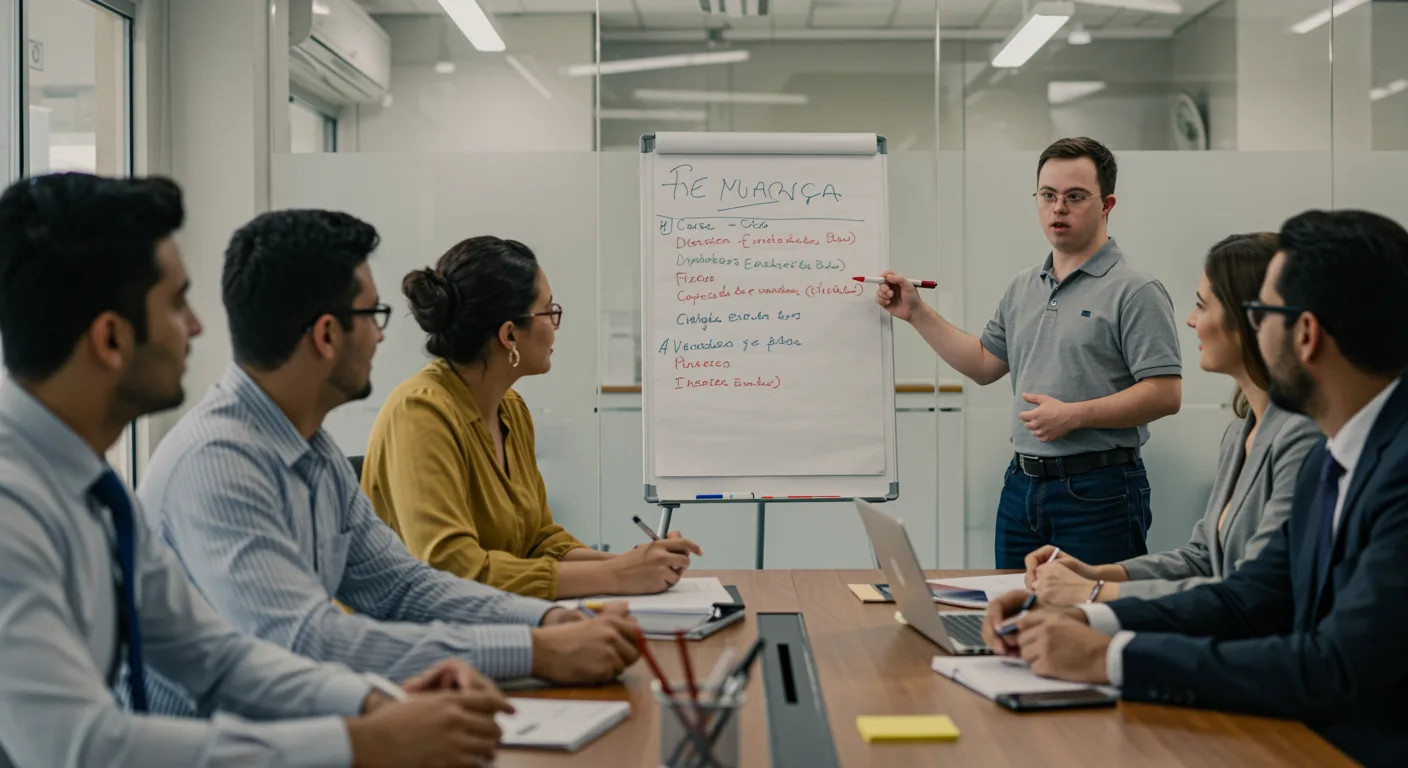
He was hired. He works his shift. He delivers what was asked.
But he eats lunch alone.
He speaks little in meetings.
He avoids exposing himself.
Nobody says anything.
But, day to day, something doesn't fit.
On paper, he's included.
In practice... he's still alone.
This scene is not an exception. It repeats itself, in more subtle or more evident ways, in many companies that believe they are doing inclusion just because they comply with the Quota Law (Brazilian Law nº 8.213/1991).
And that is exactly where one of the biggest mistakes lives: confusing presence with belonging.
When inclusion stops at hiring
The law was, and continues to be, an essential advance. It opened doors, generated opportunities and placed inclusion on the corporate agenda.
But it doesn't guarantee what most sustains someone's permanence in an environment: the feeling of being part of it.
Many companies hire, onboard, train, but don't notice that, in the day to day, small signals gradually push people away.
Communication that doesn't consider different ways of processing. Leadership that doesn't know how to include without overprotecting or excluding. Processes that don't adapt and, because of that, silently limit.
And, little by little, the person begins to retreat.
Not because they lack ability.
But because they can't find space.
The impact that isn't always visible, but exists
When belonging doesn't happen, the impact is not only emotional.
It shows up in the indicators. In higher turnover. In low engagement. In difficulty retaining people. In subtle conflicts that aren't said, but are perceived.
And, often, in the feeling that "inclusion doesn't work."
But inclusion didn't fail.
What failed was the way it was built.
The point where many companies get stuck
Throughout my journey, accompanying families, educators, health professionals and, increasingly, companies, one thing became clear:
Most don't fail for lack of intention.
They fail for lack of direction.
Because transforming inclusion into culture requires more than good will. It requires understanding that people don't all function the same way, and that this is not a problem to be corrected, but a reality to be considered.
It also requires moving away from a posture of excessive protection, which still appears subtly in many organizations, and adopting a more strategic posture, where inclusion stops being an obligation and becomes development.
I saw this up close as Gabriela's mother. She has Down syndrome and today is a pedagogue, independent and active. And I keep seeing it in companies: what separates inclusion that works from inclusion that doesn't isn't intention. It's what happens after hiring.
Belonging is not constantly adapting
There is a silent but very present idea inside organizations: that the person needs to adapt in order to fit.
But belonging is not born from constant adaptation.
It is born from the possibility of existing without needing to hide.
This doesn't mean the absence of rules or responsibilities. It means creating real conditions so each person can develop their potential within who they are, and not despite it.
And often, this requires reviewing the environment, not trying to adjust the person.
Because what limits is not always the disability, the condition, or neurodivergence.
It's the context.
What truly builds inclusion
Inclusion doesn't happen in one big movement. It happens in small, consistent decisions, and I've seen this in very concrete situations.
A manager who learns to conduct meetings so that everyone can participate, not only the loudest voices. A team that revises a process because it realizes it was excluding without anyone noticing. A leader who stops asking "what does he have?" and starts asking "what does he need in order to contribute?"
These movements seem small. But they are what change the environment.
Companies that understand this stop merely opening positions and start opening spaces. Spaces for exchange. For development. For growth with support.
And this transforms not only the person being included.
It transforms the environment as a whole.
Inclusion is not about complying. It's about sustaining.
In the end, companies don't become inclusive when they hire.
They become inclusive when they manage to make people stay, develop and, above all, feel part of it.
This doesn't happen by chance.
I learned it first as a mother, and then confirmed it in every organization I met along the way.
Inclusion that stays on paper transforms nothing.
The kind that reaches daily relationships does.